 Insurance
 Health Care
 Construction
 Professional Services
 Financial Services
 Mobile
 Real Estate
 Project Management
 Client Background
CHS Healthcare, a group company of Acacium Group (UK's Largest Healthcare Solutions Partner), is a leading healthcare products / services company in the UK. Over the last 18 years, Rheal has been sole development partner for CHS and has developed a suite of six products that caters to the various healthcare aspects namely:
- Caretrack
- CHS Track
- Broadcare
- CaretrackNHSE
- CaretrackMH
- Referral Portal
 CARETRACK
Caretrack is Services Tracking & Billing System which helps the Integrated Care Boards (ICBs) track and review care provided to patients in their council by various service domiciliary and residential service providers. Commissioned by NHS England, the application is a SAAS based solution that has 90% of the market share in the UK. It is designed for Integrated Care Boards or ICBs (earlier called CCG - Clinical commissioning groups) to manage patients that require continuing healthcare, nursing care and complex health funding. Financial tracking and Invoicing are the most critical functions that the ICBs value most about this system.
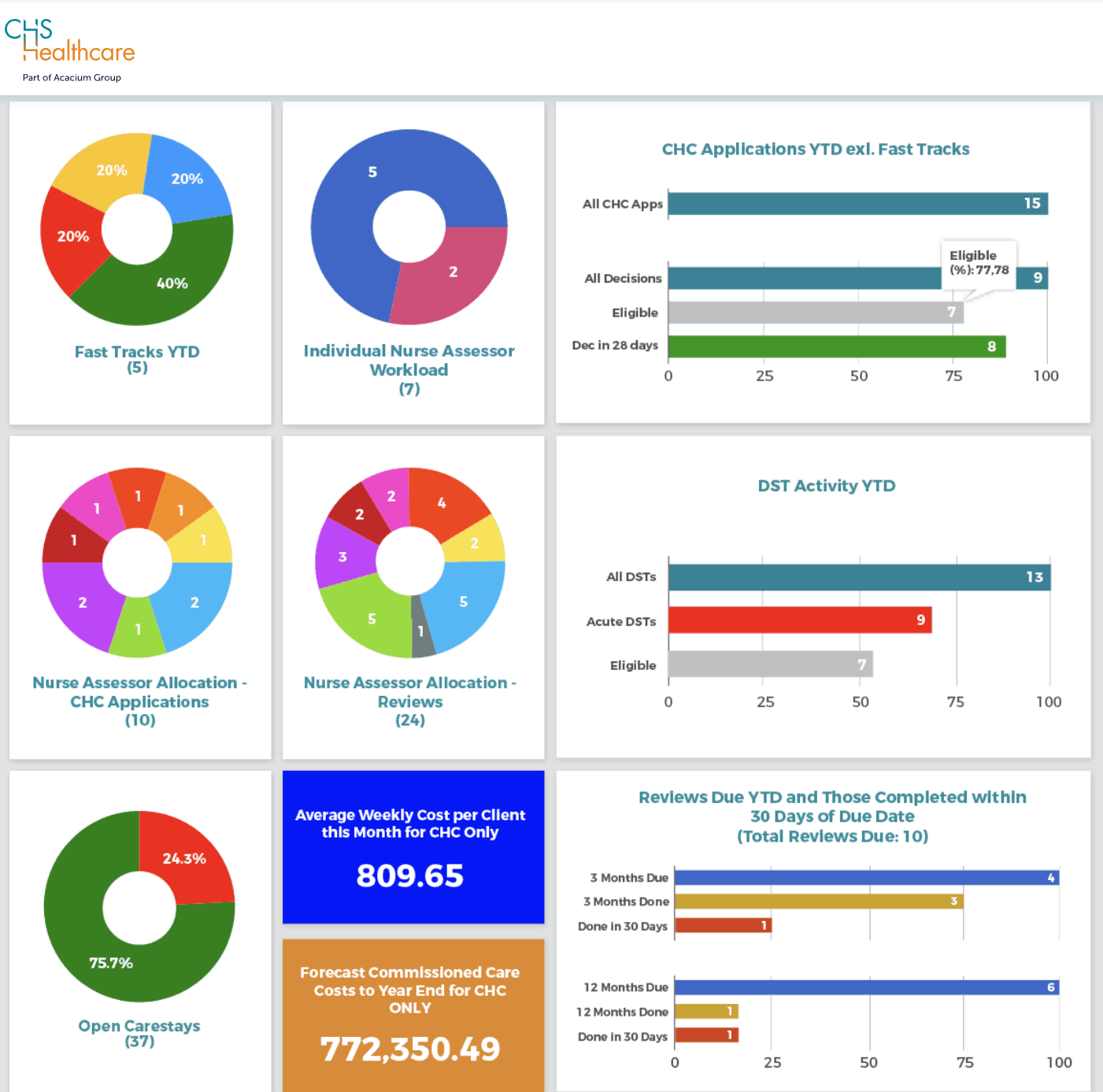
The application supports the ICB’s needs to meet new Quality Framework requirements: key chronological points are monitored (checklist to DST within 28 days, reviews at third and twelve months) and reminders set to support the operational management of patients.
The application covers functionality for substantial number of operational services, including full, end-to-end Continuing Healthcare services and are listed below:
- The management and assessment of new applications for NHS Continuing Healthcare and Funded Nursing Care
- Complex case management
- Reviews of existing patients, all funder types (including section 117)
- Retrospective reviews considering PuPOC (Previously unassessed Periods Of Care) and under New Periods (post April 1, 2013)
- Appeals, disputes, and complaints including our work in stakeholder dispute resolution management.
- Procurement and Brokerage of care
- Direct support for people with Personal Health Budgets
- Tracking care packages / costs and Invoicing
- Extensive reporting facilities including PLDS (Patient Level Data Set) and Ad Hoc reporting.
The following are the key functionalities/workflows that the system encompasses:
Referrals
A new patient is referred as one of the following types:
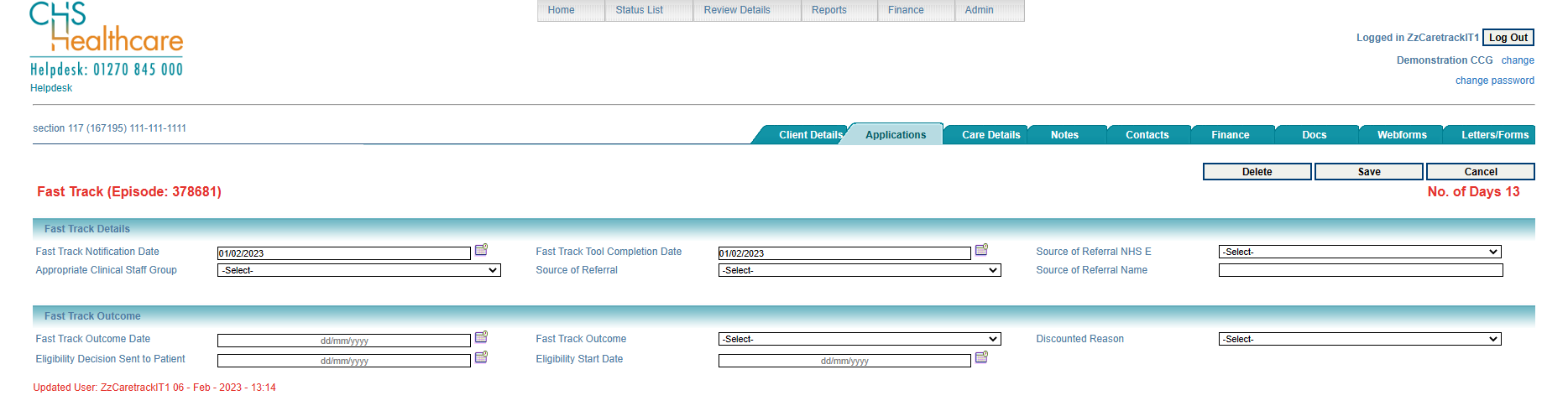
Fast Track: This need to be actioned within 48 hours from the Notification date/time. The Clinical Staff group completes the Fast Track tool and arrives at the outcome (whether Eligible for Continuing Health Care (CHC) or Discounted) If discounted, then the reason for discounting needs to be reported.
Standard Continuing Health Care (CHC): If received as a standard CHC type, then the team needs complete the Checklist process and report one of the below listed outcome.
- Do not refer to full CHC assessment but not eligible for Funded Nursing Care (FNC).
- Do not refer to full CHC assessment but eligible for FNC.
- Refer to full CHC.
Based on the outcome of the checklist, the DST (Decision Support Tool) is scheduled. When the DST is completed, the DST setting is finalised which can be done of the two.
- Acute
- Other
The Multi-Disciplinary Team (MDT) recommendation is identified, and one of the below outcomes is finalised.
- Discounted
- Eligible for NHS Funded FNC
- Eligible for Standard NHS Funded CHC
- Not Eligible
Direct Referral: If received as Direct referral, the Checklist is skipped, the DST is initiated directly, MDT recommendation identified, and the outcome is arrived at.
In each of the cases above the time required to arrive at the outcome is recorded as its very critical for the speed of action to be measured/reported to the ICB/NHS.
The following are important entities/aspects inn the Referral process that help identify and record various data points in the system.
- Nurse Assessor
- Case Manager
- Responsible Authority
- Originating GP and Practice
- Current GP and Practice
- Current GP and Practice
- Legal Status
Funding/Care Types/Services/Costs and history
Based on the Referral outcome, the Funder and Funding start date is recorded. Funding end date is not recorded until there is an event that causes change in the funder or end of funding. In case of changes in Funding, funders are added subsequently, and the history of funding info is maintained.
Funding can be - Fully Funded, Joint or Tripartite. It can be split between below three parties.
- NHSE
- Local Authority
- Independent
Care and Costs can be broadly divided in following types.
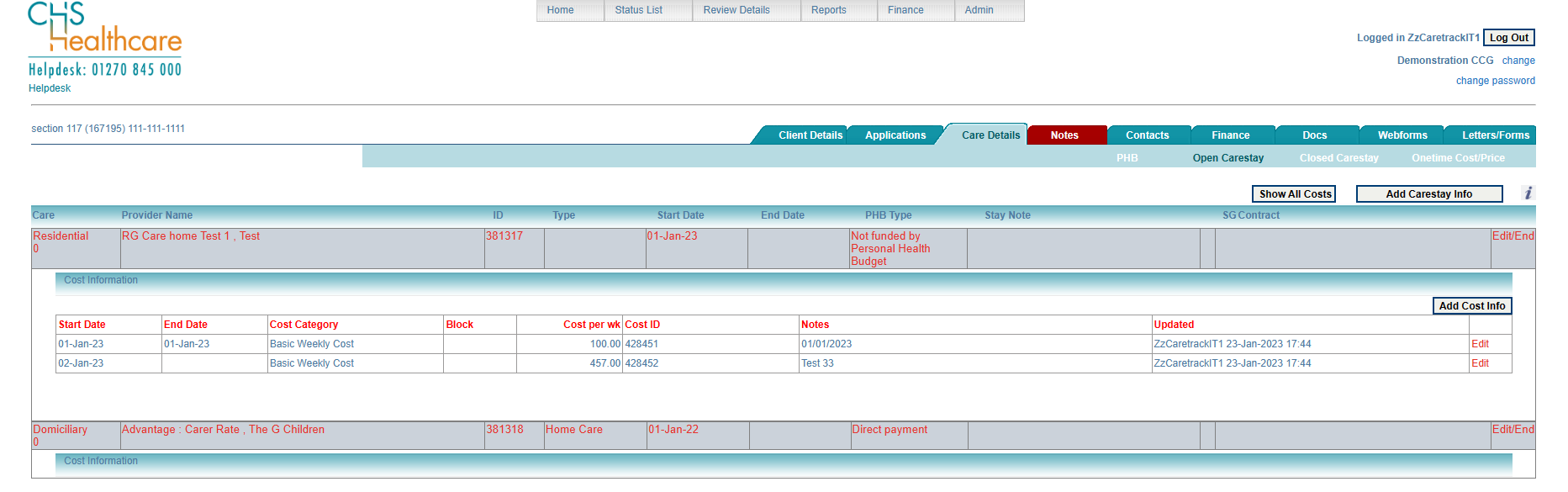
- Residential: These are weekly costs based on the care homes rates.
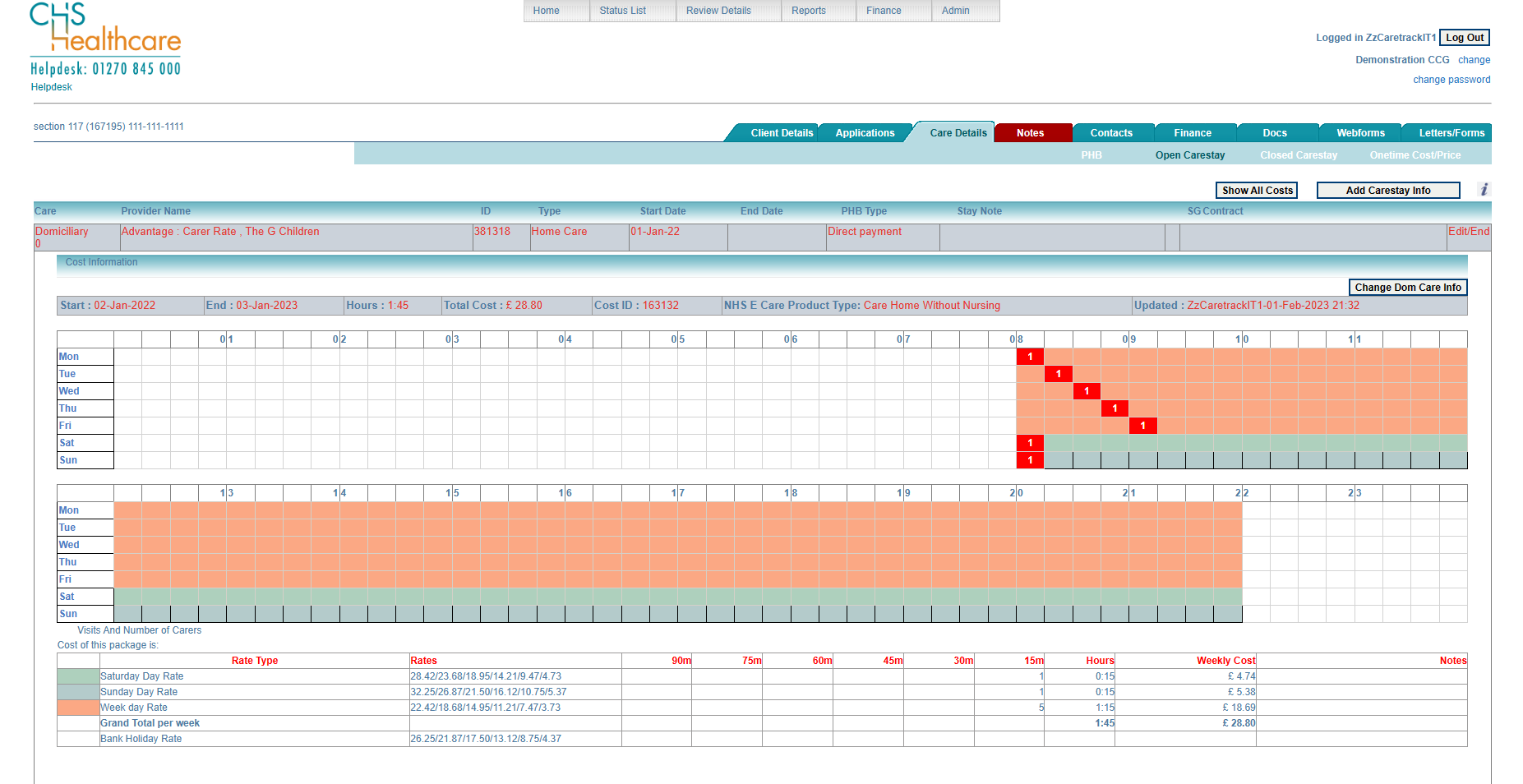
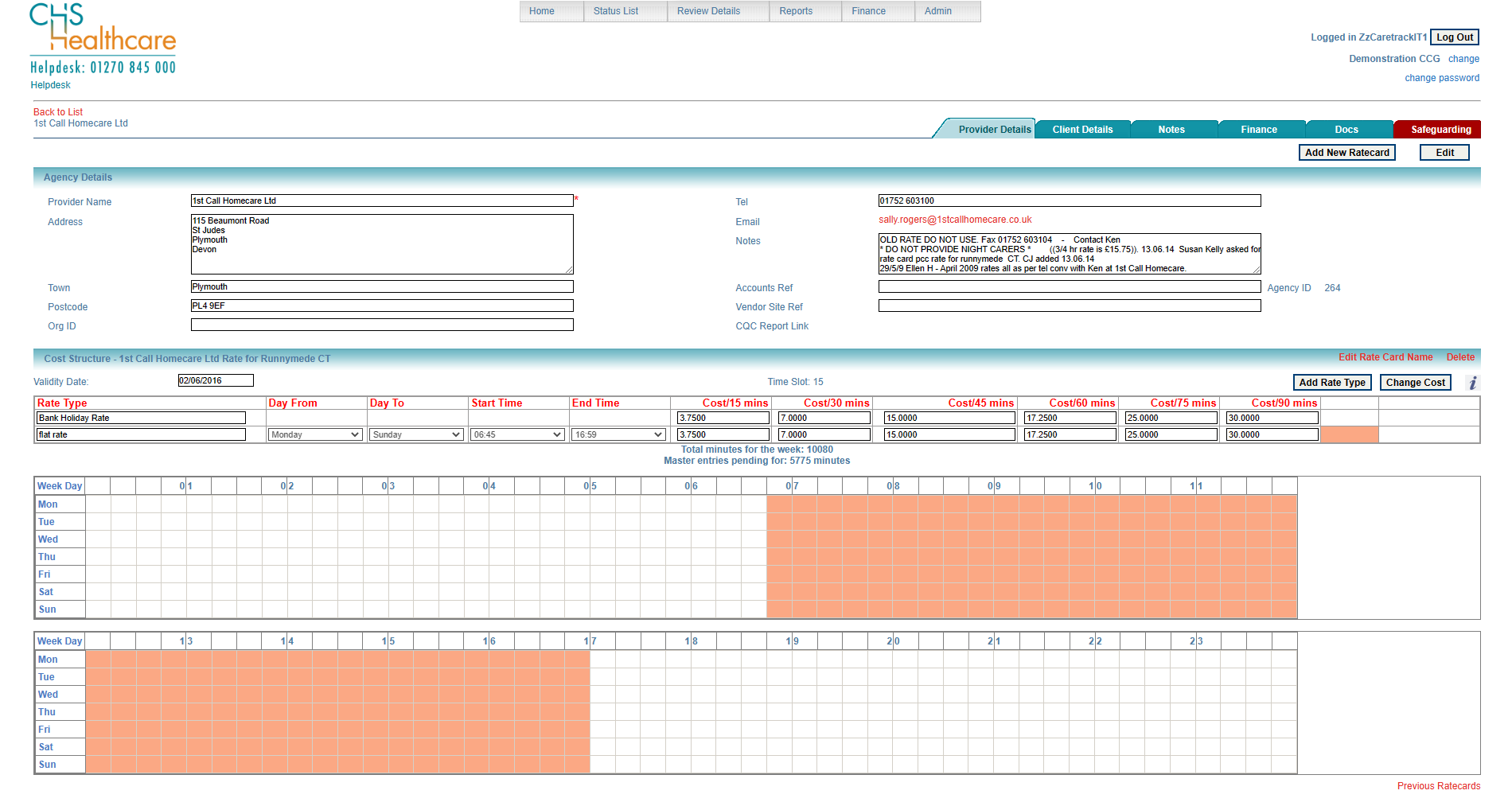
- Domiciliary: These are costs of Domiciliary services based on rates for 15 / 30 / 60 / 90 minutes and cause quite a lot of complexity.
- One-time costs: These are non-repetitive costs that have no pattern.
Reviews
Periodic reviews are to be conducted to identify changes to the eligibility for care. After every review, the outcome is recorded which can be one of the following:
- If they are eligible for CHC or FNC
- If they are no longer eligible for CHC or FNC
- If they have RIPed
Every time a review is completed, the date of the next review is also decided.
Safeguarding Alerts
If there are incidences of any Physical abuse or if the patient has any incapabilities, then such incidences are also recorded as safeguarding alerts which serve for future references.
Appeals/PuPOC
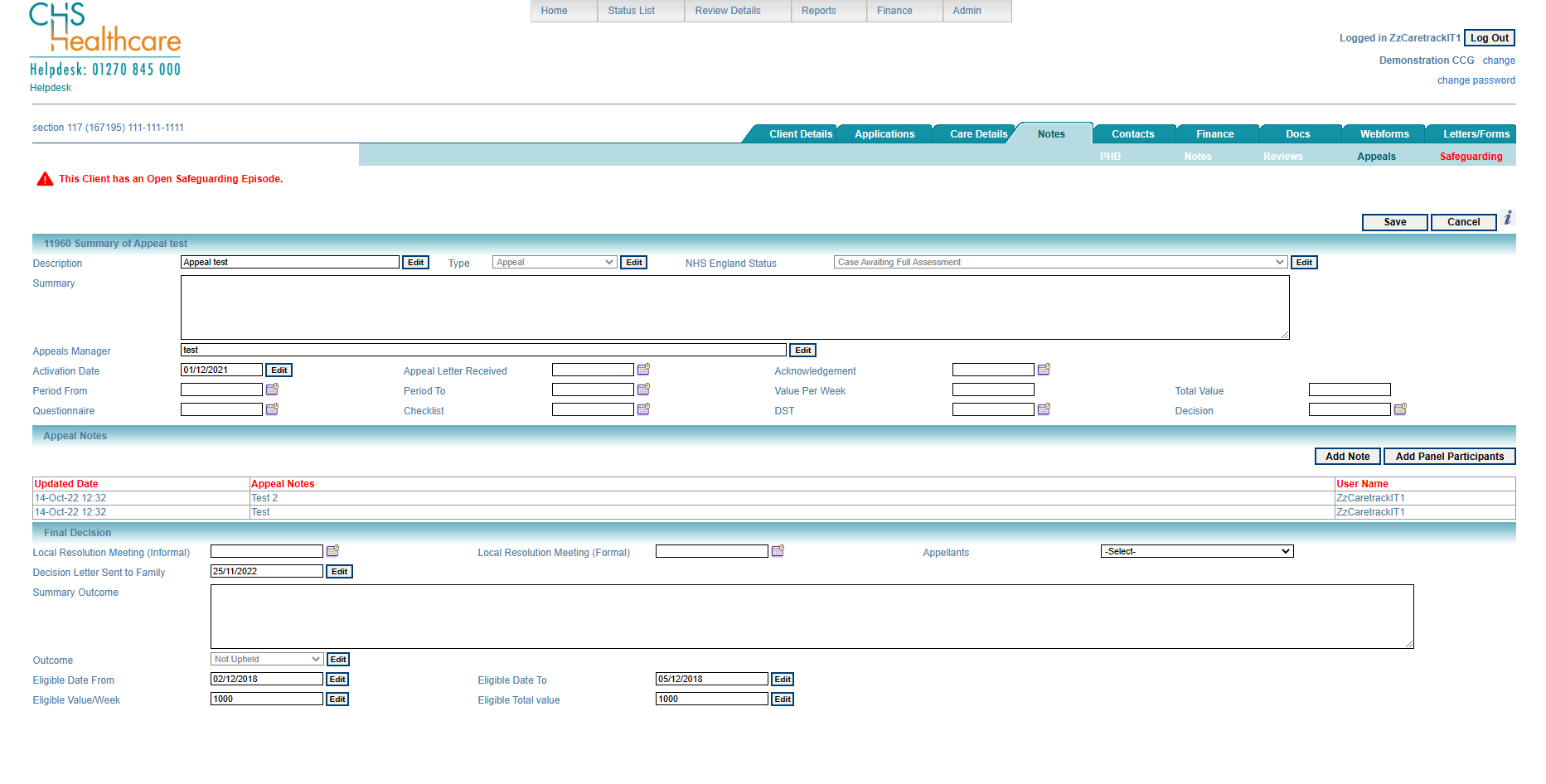
Patients or their Family members can raise Appeals if they feel that the funding decisions are wrong. Appeals can made be for
- Appeal
- Dispute
- Independent review
- PuPOC
- PuPOC Close down
Appeals are handled by ICBs by setting up Panel members to review the case. Meetings / Discussions are held with the local authority and the patient/ patient’s family to resolve the issues raised.
Based on the findings, outcomes are arrived upon, and the revised funding decisions are made.
Personal Health Budget (PHB)
If the clients/families wish to manage their own care rather than CCG arranging for their care, a personal health budget is setup for them.
- Direct Payment
- Third Party Budget
- Mixed
- Notional Budget
The process followed for setting up budgets is the following:
- Risk assessment is carried out.
- PHB tool is used to identify the Budget.
- Indicative Budgets are set up and offered to the client.
- Based on the discussions/agreements with the client, an agreed budget and the period of the budget is set up.
Invoicing
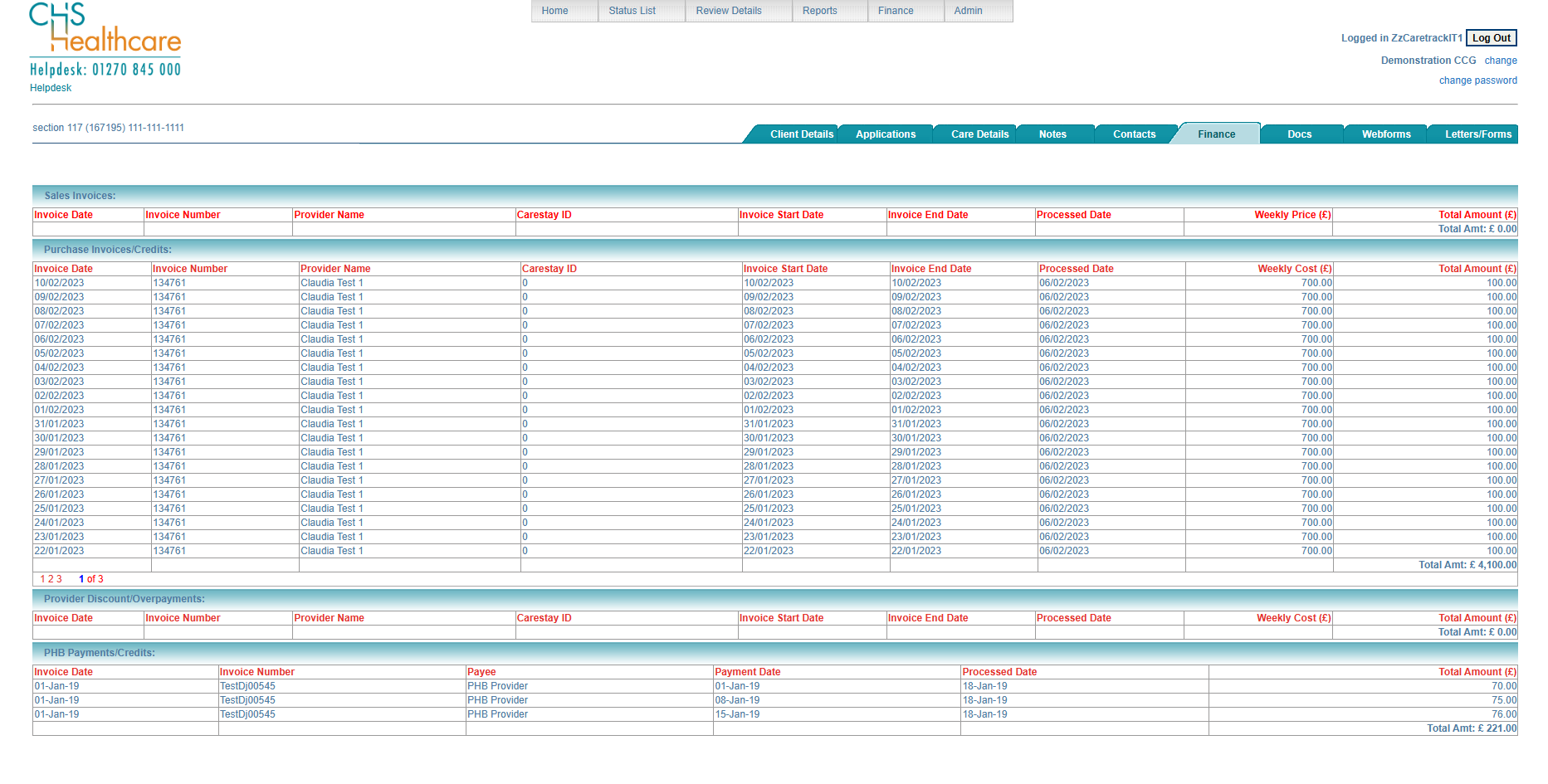
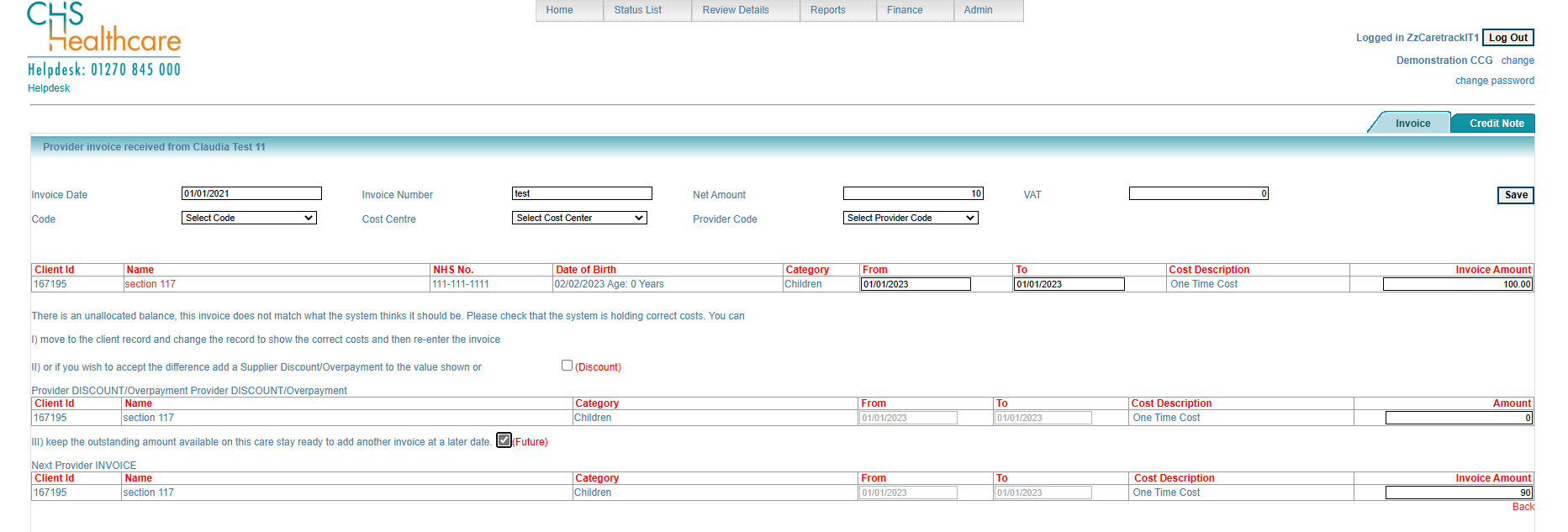
Based on the Costs set up, monthly invoices are raised for the patients care. In case the costs are altered after the invoices are raised then the Adjustments entries are made and based on these, invoices for these adjustments are again raised.
Patient Level Data Set (PLDS)
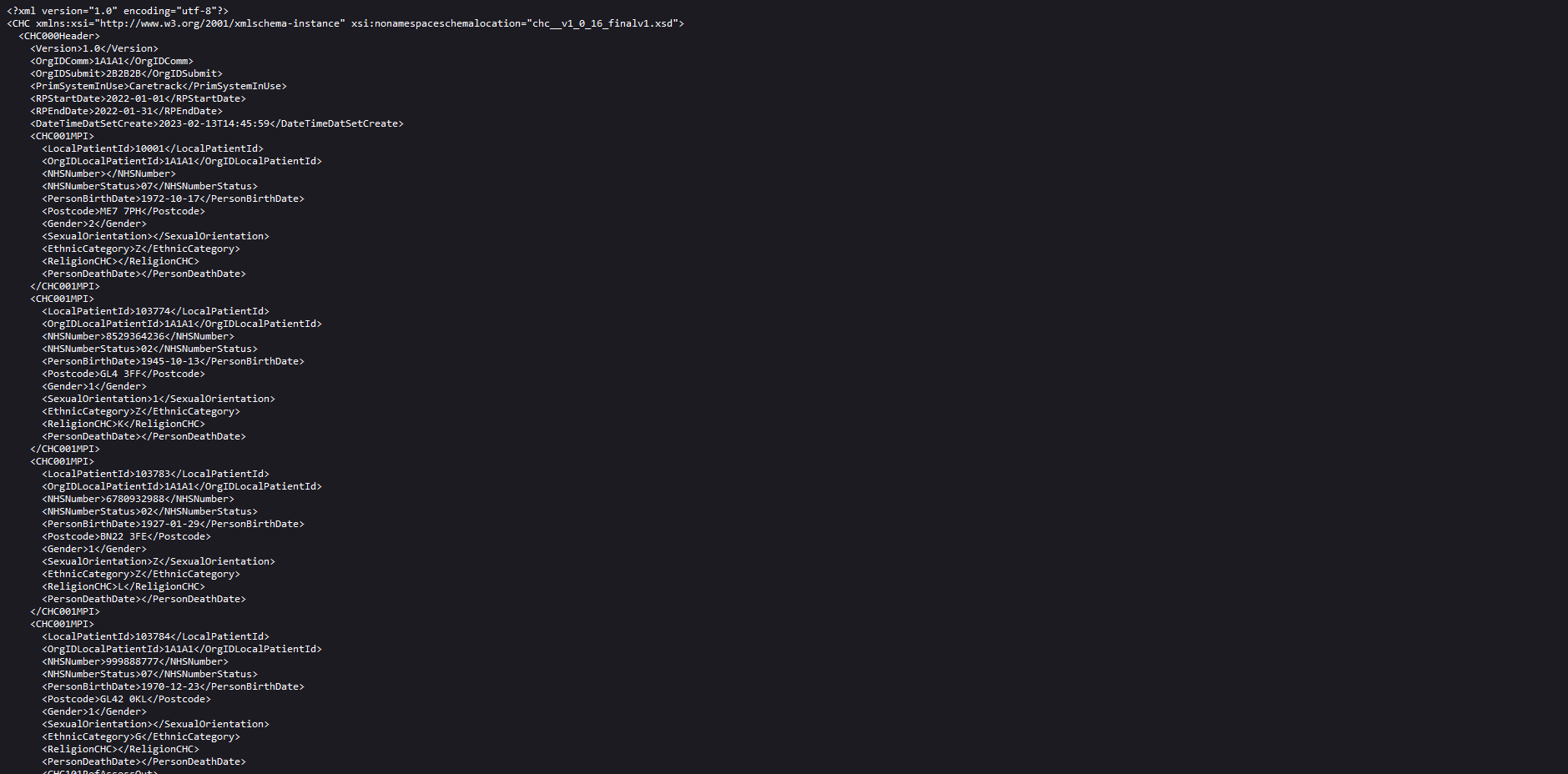
This is one of the most important reporting requirements that Caretrack takes care of and one which the CCGs submit each month to NHSE. The PLDS information intends to re-use operational data for purposes other than direct patient care. It defines the data items, definitions and associated value sets extracted or derived from Caretrack and sent to NHS Digital for analysis purposes.
Importance of PLDS
The NHS CHC information captured within the data set supports the national aim which is to deliver:
- Better outcomes,
- Better experience and
- Better use of resources, by providing detailed evidence that is currently unavailable.
It helps to demonstrate:
- where patients are being placed out of area
- where care packages are being changed frequently
- other evidence which may indicate poor outcomes for the patient, allowing this to be identified and addressed.
The data set allows monitoring of patients going through local appeals processes to ensure these are resolved quickly and highlights ICBs where high numbers of eligibility decisions are being overturned on appeal.
Integration with NHSE Spine
Provisions are made in the application to integrate with NHSE Spine services to retrieve the important patient information while creating / maintaining new patients’ information.
Regular jobs are run to identify the RIP dates because NHSE is the most accurate source of RIP information.
Client Details Screen: Shows the details of the client being referred.
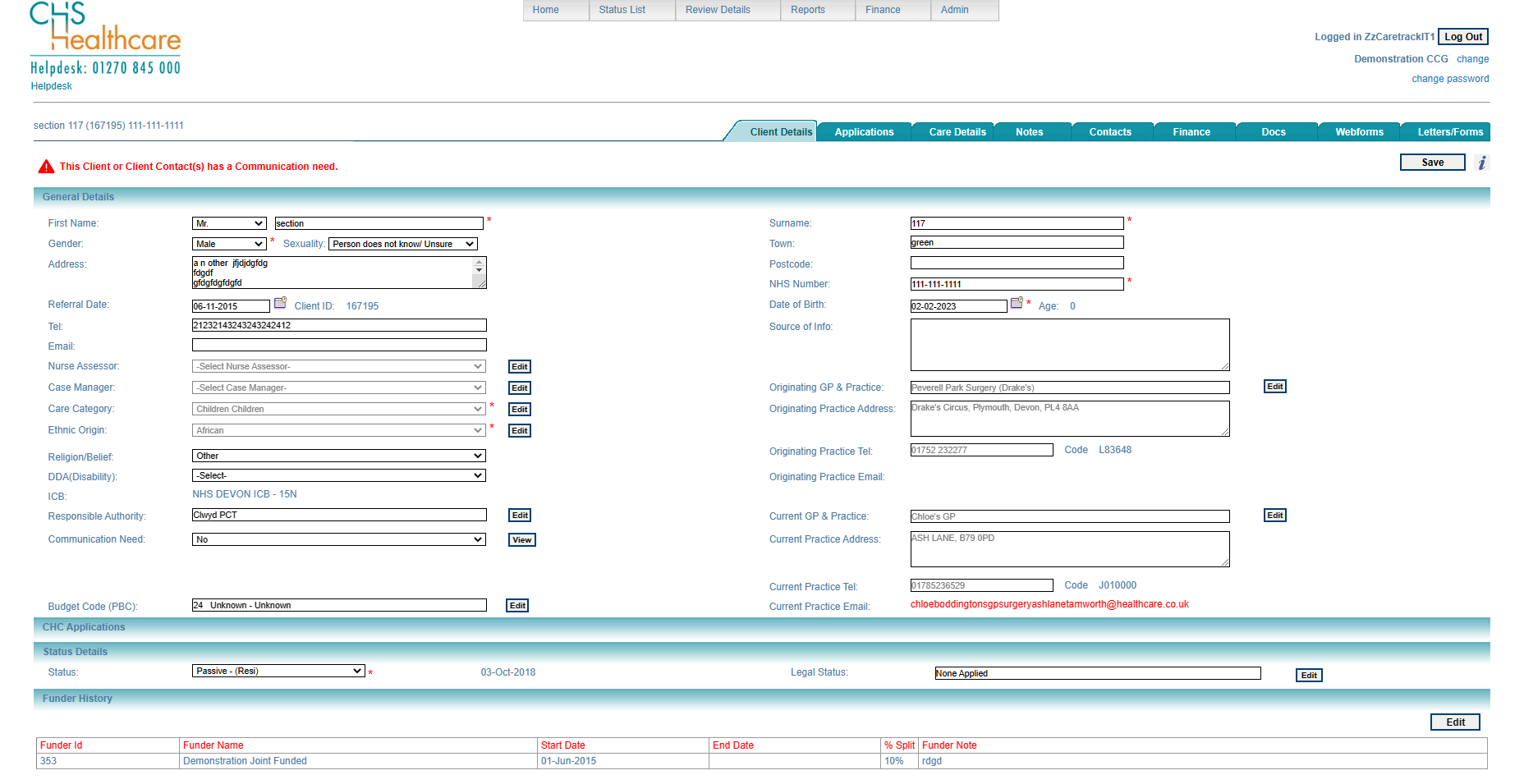
Applications list: Shows the various applications received for a client.
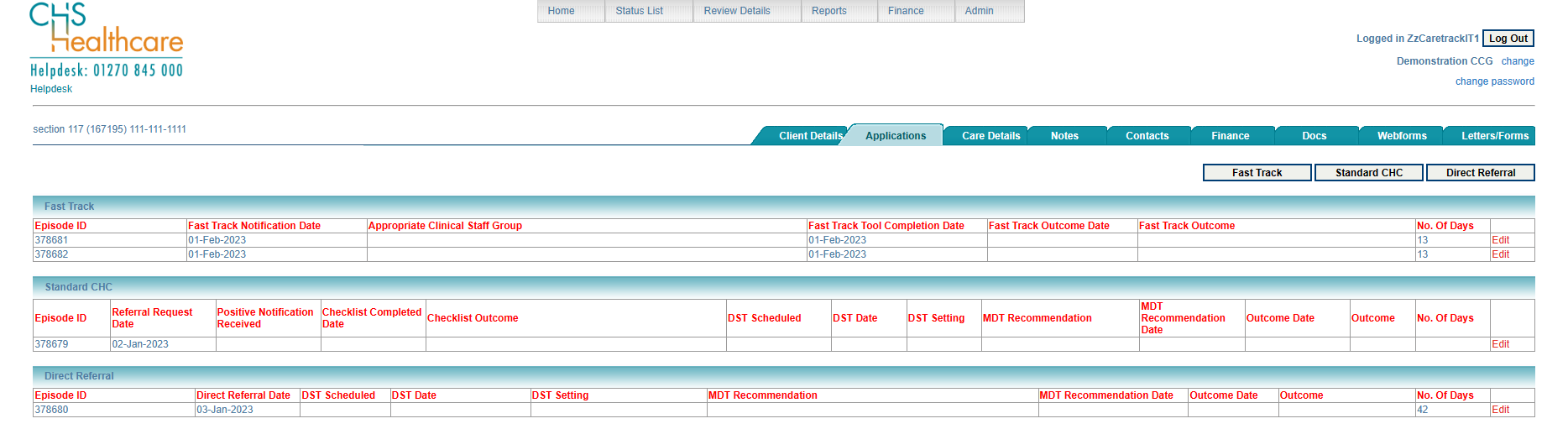
Standard CHC Application Details screen.
Care Details: Displays the details of the Residential care/cost.
Care Details: Displays the details of the Domiciliary care/cost.
Providers provision to set up the rates of a Domiciliary care.
Appeals: Details of a new Appeal.
Invoicing: List showing up Invoice history of a client.
Invoicing: Provision for creating a manual Invoice.
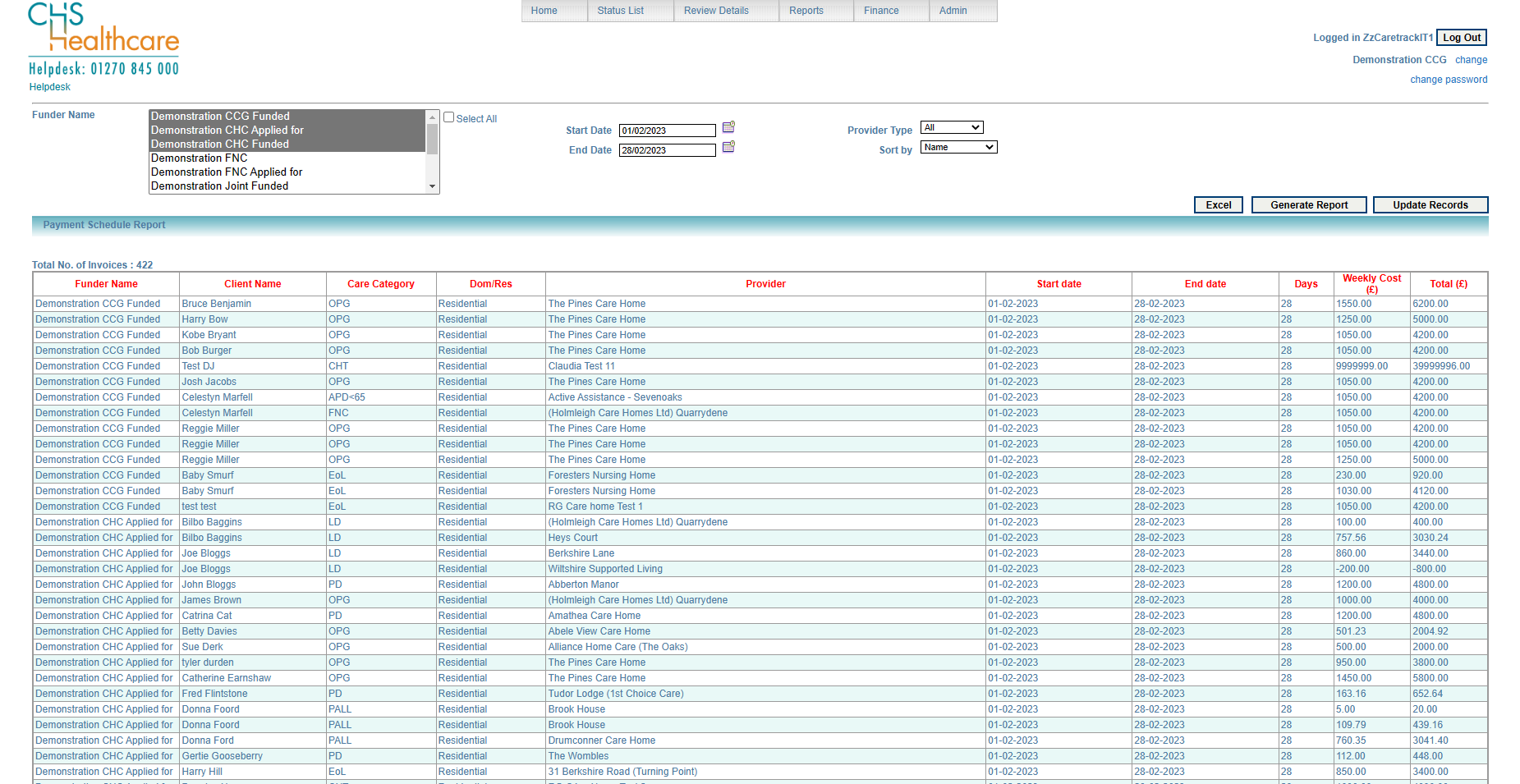
Invoicing - Payment Schedule Report: Provision for creating bulk Invoices.
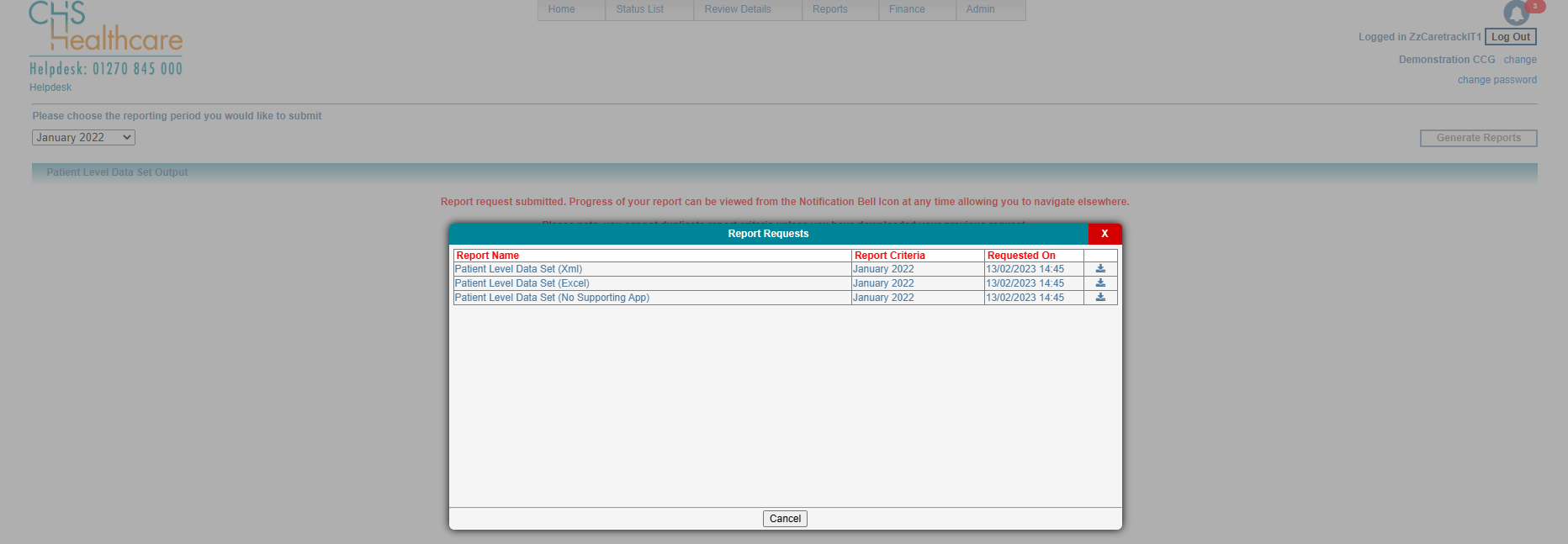
PLDS: Report Request and Download queue.

PLDS Report – Sample Report XML.